You can now book your room at Heritance Kandalama using our special rates. RSVP will be available soon!

Kelly & Yasas’ Guide to Sri Lanka
Whether you’re visiting Sri Lanka for the first time or returning to explore more, we’ve put together a guide to help you make the most of your trip. It covers the essentials for getting around, key highlights, and tips for experiencing the island’s mix of culture, nature, and beaches. Perfect for planning your journey around our wedding celebrations.
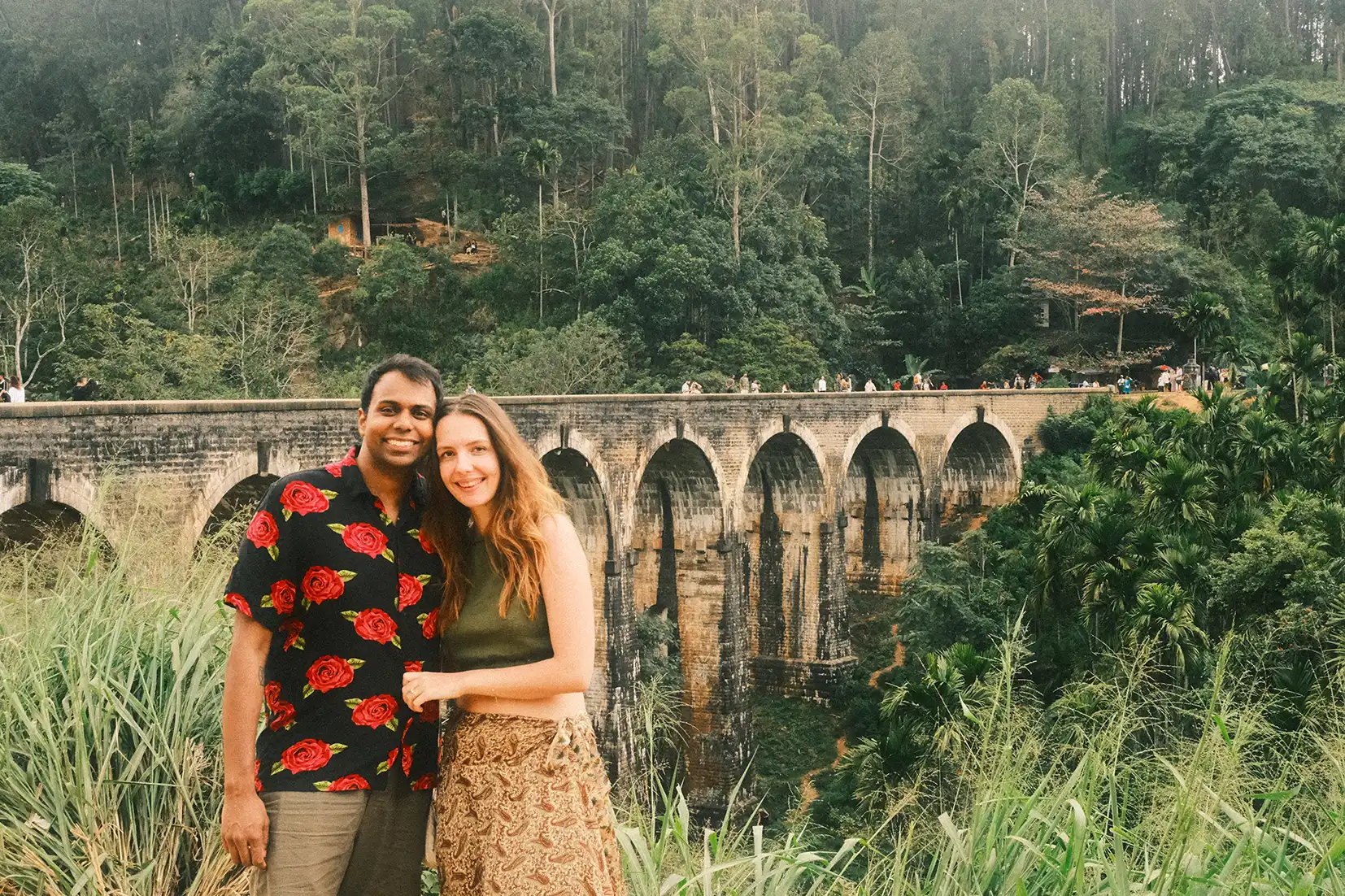
We are so grateful to have you all here with us to celebrate our wedding in beautiful Sri Lanka.
We know many of you have travelled from near and far, and we couldn’t feel more humbled and excited to have all of our favourite people gathered together in one place. It’s not every day we get to share time like this with the people who’ve shaped our lives, and we intend to savour every minute of it.
We’ve planned this not just as a celebration of our wedding, but as a chance for all of us to relax, connect, and enjoy the island’s beauty together. Whether you’re here for a quick trip or extending your stay, we hope this guide helps make your time smooth, easy, and full of good memories.
Thank you for making the journey and being part of this special moment in our lives.
See you soon!
With love,
Kelly & Yasas
At a glance
118/119
~22 million
26°C to 32°C
Sri Lankan Rupee
GMT + 5½
Sinhala, Tamil & English
A brief history of Sri Lanka
Sri Lanka’s story begins long before written records, with its earliest known inhabitants, the Vedda people, an indigenous community whose origins on the island stretch back thousands of years. Their descendants still live in small communities today, preserving aspects of a unique cultural heritage. Sri Lanka’s recorded history begins with Prince Vijaya’s arrival from India in 543 BC, which started centuries of migration, settlement, and the eventual spread of religion, laying the foundation for the island’s ancient civilisations.
Over the next two millennia, a series of powerful kingdoms defined the cultural, religious, and political identity of the island. The first major kingdom, Anuradhapura, emerged in the 4th century BC and thrived for over a millennium. Power then shifted to Polonnaruwa, where rulers continued to develop grand architecture and religious centres, many of which survive today as UNESCO World Heritage Sites.
In later centuries, the Kingdom of Kandy, tucked into the central hills, became a stronghold of Sinhalese culture. Meanwhile, in the north, the Kingdom of Jaffna grew as a centre of Tamil culture, fostering trade, literature, and temple-building, leaving a legacy that still defines the region’s identity today.
Colonial powers arrived in succession over several centuries, each leaving a lasting imprint on the island. The Portuguese were the first to arrive in 1505, followed by the Dutch in the 17th century, who wrested control from the Portuguese. Both imposed their own systems of governance and commerce, particularly in the maritime provinces. In 1796, the British took over from the Dutch, and by 1815, they had brought the entire island under colonial rule.
During the British rule, Ceylon’s (the name given to the island by the colonisers) economy was completely transformed to serve imperial interests. Expansive tea, coffee, and rubber plantations were established, and large numbers of Tamil labourers from South India were brought in to work on these estates (a move that would later contribute to ethnic tensions). While colonialism modernised infrastructure in some areas, it also undermined local governance, eroded indigenous traditions, and intensified ethnic and religious divides.
By the early 20th century, growing nationalist sentiment and global movements toward self-determination fuelled calls for independence. After years of political activism, constitutional reforms, and post-war pressure on the British Empire, Ceylon finally gained its independence in 1948. In 1972, the country was established as a republi,c and the name Sri Lanka was adopted.
The decades following independence saw increasing tensions between the Sinhalese majority and Tamil minority, fuelled by issues of language, land, political representation, and post-colonial identity. These tensions erupted into a civil war in 1983, waged primarily between government forces and the Liberation Tigers of Tamil Eelam, a militant separatist group seeking an independent Tamil state in the north and east. While the war ended 26 years later in May 2009, there have not been any real attempts to investigate abuses or heal fractured communities. The military has not been held accountable for the atrocities they committed, and the LTTE leadership died in battle or were executed, so their own brutality will never be investigated.
Just five years before the war ended, Sri Lanka faced another tragedy: the Boxing Day tsunami of 2004, which struck the island’s eastern and southern coasts. Over 30,000 lives were lost, and entire villages were swept away.
The Easter bombings of 2019 targeted Catholic churches and hotels, killing 269 people and devastating tourism. The same year, significant tax cuts slashed government revenue before COVID-19 did serious damage to the economy.
In 2021, a ban on chemical fertilisers led to nationwide agricultural failure, while excessive borrowing and money printing triggered soaring inflation, which peaked at 70% in August 2022. The country ended up failing to pay its foreign debts.
Following huge protests in 2022 and the resignation of the president, Sri Lanka began a major political and economic shift. It secured a bailout from the International Monetary Fund and implemented reforms aimed at stabilising the economy.
The Easter bombings of 2019 targeted Catholic churches and hotels, killing 269 people and devastating tourism. The same year, significant tax cuts slashed government revenue before COVID-19 did serious damage to the economy.